






Who We Are
Staff
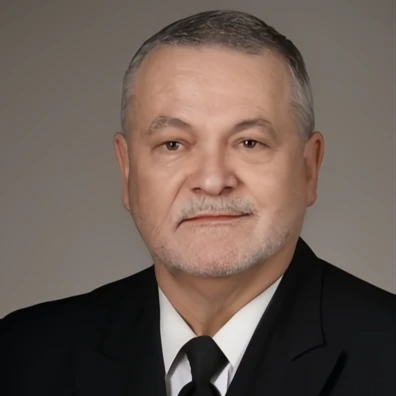
Peter Daszak
Dr. Peter Daszak has worked for more than 25 years in infectious disease and conservation research and outreach, designing and managing international collaborative programs in over 45 countries. He is the President of the nonprofit Nature Health Global, and former President of EcoHealth Alliance. He is a member of the US National Academy of Medicine, and Editor-in-Chief of the Springer-Nature journal EcoHealth.
Dr. Daszak has raised over $150 million for scientific research, conservation programs and international projects from major donors, corporations, foundations and Federal agencies. He was in in the leadership team of USAID PREDICT 1 & 2 ($240 million over 10yrs for emerging disease research and outreach), was Chief-of-Party for USAID IDEEAL, and has been PI on ~10 multi-year NIH and NSF grants. He has published over 325 scientific papers on the origins and drivers of emerging diseases involving diverse disciplines from conservation biology, virology, ecology and environmental sustainability to community outreach programs that reduce the risk of disease emergence.
Dr. Daszak’s research successes include discovering the bat origin of SARS-CoV, MERS-CoVs, SADS-CoV, and SARS-CoV-2, identifying the drivers of Nipah virus emergence, identification of chytridiomycosis as the cause global amphibian declines, and publishing the first global emerging disease ‘hotspots’ map. Dr. Daszak is a member of the National Academies Standing Committee on Emerging Infectious Diseases & 21st Century Health Threats, and former Chair of NASEM’s Forum on Microbial Threats. He has served on panels, committees and advisory boards to the US National Research Council, Future Earth, two Lancet commissions (One Health & COVID-19), WHO R&D Blueprint program for pathogen prioritization, and the WHO-China Joint Study on the Animal Origins of COVID-19.
Dr. Daszak won the 2000 CSIRO medal for collaborative research on the discovery of amphibian chytridiomycosis and has been ranked by the Web of Science as a Highly Cited Researcher in multiple years.
Aleksei Chmura
Dr. Aleksei Chmura is a scientific researcher and nonprofit manager with a Ph.D in the disease ecology of bat and rodent viruses in the wildlife trade in China. His research has helped characterize the emergence of SARS and Avian Influenza, and he has co-authored papers in Nature, PNAS, PLOS Medicine, and other leading journals.
Chmura has over two decades of experience managing and implementing global One Health and emerging infectious disease programs across Asia, Africa, and Latin America, and administrating nonprofit activities in the USA. He is the former Chief of Staff of EcoHealth Alliance, where he managed all research and outreach operations and ~$10-$20 million annual operating budget. He coordinated One Health deliverables for the $100 million+ USAID Emerging Pandemic Threats PREDICT project, served as Senior Operations Manager for the $19.5 million USAID Conservation Works Activity in Liberia, and as Senior Program Manager for the $7.5 million NIH/NIAID CREID-Network Emerging Infectious Disease Center. Dr. Chmura holds an MBA, is a Certified Research Administrator, and is the Managing Editor of the Springer-Nature peer-reviewed journal EcoHealth. His work at NHG advances our collaboration with local and international partners to strengthen surveillance, research capacity, and policy coordination at the human–animal–environment interface.
Scientists
Anna Durrance-Bagale
Dr. Anna Durrance-Bagale is a One Health professional and qualitative social science researcher, with a primary focus on zoonotic and other infectious disease, and how to best facilitate community engagement in research and programmes.
Dr. Durrance-Bagale is passionate about working with communities, the experts in their own context, to facilitate co-production of research, and how their ideas and experiences can be used to prevent spillover and transmission of zoonotic disease. She has worked on projects with communities in emerging infectious disease hotspots around the world, including Nepal, Pakistan, Myanmar, Laos, and Cambodia. Other projects have focused on Rohingya refugees in Bangladesh, and working with human and animal healthcare professionals on issues around AMR in Tanzania.
Dr. Durrance-Bagale has MSc degrees in neuroscience, and control of infectious diseases, and a Ph.D. on community priorities and drivers of zoonotic disease risk in Nepal. Her Ph.D was based on a study of the drivers of zoonotic disease spillover, for which she conducted detailed work engaging with local communities, human and animal healthcare professionals and policy makers on perspectives and priorities to inform co-design of context-appropriate approaches for disease control in the country. As a qualified post-graduate teaching professional Anna holds various teaching roles at the London School of Hygiene & Tropical Medicine, on both distance learning and face-to-face MSc modules, and she is the Tropical Medicine Module Lead for the Diploma in Remote and Offshore Medicine run by the Royal College of Surgeons in Edinburgh, Scotland. Dr. Durrance-Bagale has authored over 35 peer-reviewed publications and is a Review Editor & Editorial Board member for the Springer-Nature journal EcoHealth and SSM – Qualitative Research. She is a member of the ‘Women for One Health’ specialist community, and the ‘One Health Social Sciences’ specialist group, reflecting her main interests. In 2020 she worked as a consultant for the WHO on a project examining European policy responses to COVID-19 and their effects on health inequity.
Hume Field
Dr. Hume Field is an Australian veterinarian who has contributed to emerging disease research for more than 25 years. He played a key role in the identification of bats as the natural reservoir of Hendra virus in Australia, Nipah virus in Malaysia, SARS coronaviruses in China, and Reston ebolaviruses in The Philippines. His cross-disciplinary formal qualifications include veterinary science, environmental science, and emerging diseases epidemiology. His enduring professional focus is human-associated disease emergence from wildlife, and associated threats to veterinary and public health. He is currently an Adjunct Professor in the School of Veterinary Science at The University of Queensland, Australia.
In his spare time, Hume is co-founder and Operations Manager of Little Bella Nature Refuge in the Sunshine Coast hinterland in SE Queensland, Australia, where threatened habitat and wildlife species including Koala, Greater glider, Powerful owl, and all native creatures great and small are protected and fostered.
Nichar Gregory
Dr. Nichar Gregory is an Infectious Disease Ecologist whose work investigates how environmental change influences the emergence and spread of vector-borne and zoonotic diseases.
Dr. Gregory specialises in ecological modelling, spatial analysis, and data integration to reveal complex patterns in disease dynamics. Her interdisciplinary research bridges ecology, public health, and climate science, with a strong emphasis on real-world application and policy relevance. Dr. Gregory has led and contributed to international collaborations in Brazil, Malaysia, Thailand, Tanzania, and South Africa, partnering with academic institutions, government agencies, and civil society. She is deeply committed to fostering equitable, cross-sector partnerships that tackle the interlinked challenges of climate change, human health, and biodiversity loss, with a focus on co-producing knowledge that supports locally informed, globally relevant solutions.
Tom Hughes
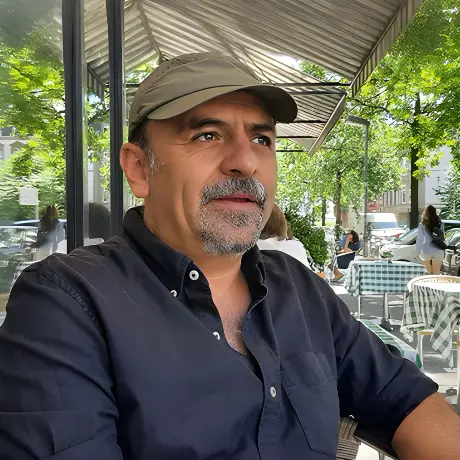
Tom Hughes is the Founder and Director of Conversation Medicine based in Malaysia and works closely with government and academic partners in the region to establish sustainable disease surveillance systems for wildlife and people.
Tom is also affiliated with the Mahidol Oxford Tropical Medicine Research Unit (MORU) in Bangkok, Thailand and has managed projects for the World Health Organization, The Food and Agriculture Organization of the United Nations, The United Nations Office on Drugs and Crime and others, to strengthen research for high consequence pathogens and develop personnel and laboratory capacity for biosecurity and biosafety across Southeast Asia.
Tom has expertise in wildlife biology, field logistics, zoonotic disease surveillance in wildlife, livestock, and humans, conducting risk assessments and multi-disciplinary research coordination. Tom has designed, initiated, and managed collaborative projects on surveillance, viral discovery, and the ecology of wildlife reservoirs of zoonoses. He has designed and led field programs that underpin advances in our understanding of wildlife-origin zoonoses (e.g., Macaques and Herpes B), risk factors for emergence (e.g., Nipah virus in fruit bats), and the distribution of viruses (e.g., Ebola virus in the Philippines).
Conservation Medicine was responsible for conducting all the virus surveillance work in Malaysia for EcoHealth Alliance. Tom was the PREDICT Malaysia country coordinator for the USAID’s Emerging Pandemic Threats program. In 2012 Tom established the Deep Forest Project in Sabah, a study of the effects of land use change on viral diversity and set up the Wildlife Health Unit and designed and built the Wildlife Health, Genetic and Forensic Laboratory, a Biosafety Level 2 biocontainment Laboratory certified to international standards, with Sabah Wildlife Department. In October 2013 Tom was appointed the Deputy Chief of Party for the USAID IDEEAL project that investigates how human alteration of landscapes and ecosystem degradation contribute to disease emergence. In 2016 Tom worked with the Department of Wildlife and National Parks Peninsular Malaysia to design and establish the Molecular Zoonosis Laboratory at the National Wildlife Forensic Laboratory. In May 2017 he became Co-PI on the DTRA funded Serological Biosurveillance for Spillover of Henipaviruses and Filoviruses at Agricultural and Hunting Human-Animal Interfaces in Peninsular Malaysia that helped strengthen capacity for serological surveillance within national labs and characterize henipavirus and filovirus exposure in bats, livestock, and people. In June 2020 Tom became Co-Investigator and In-country Implementation Lead for the NIAID funded Emerging Infectious Diseases – Southeast Asia Research Collaboration Hub which continued Conservation Medicine’s ongoing collaboration with Malaysian government partners. In September 2022, he became Project Manager for a MORU project funded by DTRA, The Enhancement of Zoonotic Disease Outbreak Detection in Lao PDR, Cambodia, and Thailand.
Anne Laudisoit
Dr. Anne Laudisoit is a conservation biologist and emerging disease researcher with a strong expertise in field-based research into vector-borne diseases eco-epidemiology and biodiversity surveys (mammalian and medical entomology) in remote and difficult conditions where the answers to our scientific question may be found.
Anne’s research focuses on understanding the dynamics of hosts, vectors and diseases within the changing ecosystems that the human footprint has produced. She spent 10 years intermittently living and working on plague epidemiology in endemic plague foci and tested alternative laboratory models (mouse insect and entomopathogenic nematode infection in BSL3).
Dr. Laudisoit has extensive field international experience, including field and laboratory work and team coordination, diplomacy, language skills, teaching ability and mentoring in former Soviet Union countries, and in West, Central and East Africa. Since 2003 she has been co-writing, supervising, and coordinating neglected and vector borne diseases research projects (plague, Rickettsia, Bartonella, Monkeypox, Onchocerciasis-associated-epilepsy, PREDICT2-USAID) and biodiversity monitoring studies in the DRCongo, Tanzania, Kazakhstan, Ivory Coast, Zanzibar, and Congo Brazzaville. During the last decade, Dr. Laudisoit has spent substantial time working to survey and restore fragmented forests in Eastern DRCongo as a National Geographic Society Explorer since 2018. She is also dedicated to teaching and implementing One Health driven projects and mentoring MsC and phD students from Africa, and disseminating research outputs to communities and policy makers in developing countries.
David Morens
Dr. David M. Morens is a global authority on emerging infectious diseases, virology and epidemiology. He has authored hundreds of scientific articles in major biomedical journals on numerous aspects of emerging diseases, on viral disease pathogenesis, and on the history of medicine and public health.
David Morens received the A.B. degree (Psychology) in 1969 and the M.D. degree in 1973, both from the University of Michigan. He is Board Certified in Pediatrics (1978) and in Preventive Medicine (1980), with fellowship training in pediatric infectious diseases and additional training in virology. Dr. Morens served as a United States Public Health Service officer in CDC’s Epidemic Intelligence Service from 1976-1978; then served as a virologist in CDC’s Bureau of Laboratories, including two years studying Lassa fever in Sierra Leone, West Africa; and served as Chief of CDC’s Respiratory & Special Pathogens Branch, where he also represented the National Center for Infectious Diseases on CDC’s AIDS Task Force.
From 1982-1998 Dr. Morens served at the University of Hawai‘i, in the School of Medicine as Professor of Tropical Medicine, and as Professor and Chairman, Department of Family Practice & Community Health; in the School of Public Health as Professor and Chairman, Epidemiology Department; and in the College of Natural Sciences as Professor of Microbiology. In 1998 he joined the National Institute of Allergy and Infectious Diseases, as an officer on active duty in the United States Public Health Service. He then served as Senior Advisor to the Director, National Institute of Allergy and Infectious Diseases, National Institutes of Health until 2025. Dr. Morens is past President of the American Epidemiological Society and past Chairman of the American Committee on Arthropod-Borne and Zoonotic Viruses.
Alessandra Nava
Dr. Alessandra Nava is a veterinarian with a Ph.D on the effects of forest fragmentation on wildlife health.
Formerly a lead scientist at IPE, Sao Paulo, Dr. Nava has been based in the Brazilian Amazon for more than a decade where she is now a Public Health Researcher at Fiocruz Amazônia. Her research is on conservation biology, and its intersection with the health of forests, wildlife and people.
Dr. Nava works closely with local communities, and uses a One Health approach and participatory science to produce research that has value for the ecosystem and the communities that live within it. Dr. Nava is a proud supporter of indigenous peoples rights in the Amazon and around the world.
Paula Prist
Dr. Paula Ribeiro Prist is a Senior Programme Coordinator for Forest and Grasslands Unit at IUCN.
A biologist by training, Dr. Prist holds a master’s, doctorate and post-doctorate in landscape ecology from the University of São Paulo, Brazil. Her line of research focuses on trying to understand how to create healthy landscapes for people, with a focus on multifunctional landscapes that can mitigate climate change, provide ecosystem services and also provide positive health outcomes. Her long-term plan is to contribute to the development of high-quality research to understand how conservation can contribute to the maintenance of human health and how the management of tropical landscapes can be done to create landscapes with low risk of transmission of zoonotic diseases and high maintenance of human health. She was the Principal Scientist for Conservation & Health at EcoHealth Alliance between 2021-2024, and was a Co-Lead Author of the next IPBES Nexus. Currently she leads the IUCN thematic group of human health (300 – 1000 members), is a member of the International Program Officer for the Future Earth One Health group and part of the STAR-IDAZ & GloPID-R – One Health Working Group.
Jamie K. Reaser
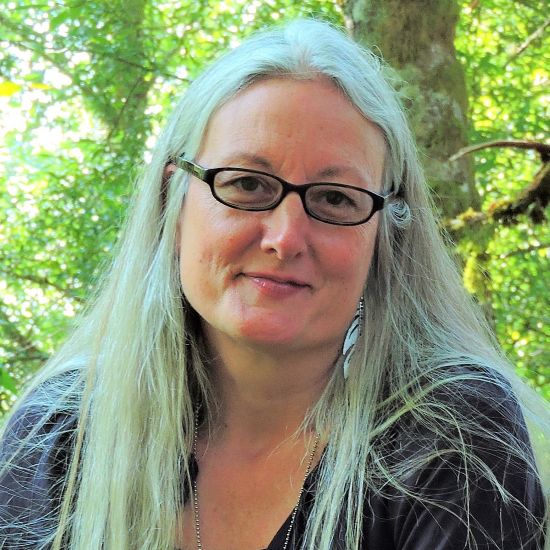
Dr. Reaser has worked in over 70 countries as an ecologist, social scientist, international policy negotiator, and professional trainer. As a senior executive, she has substantial experience collaborating with the leadership of intergovernmental organizations, non-governmental organizations, national and tribal governments, as well as the private sector, to meet biodiversity conservation, One Health, and Planetary Health goals. She is the President/CEO of Rain Crow Consulting.
Much of Dr. Reaser’s career has focused on delivering science into the policy context. This has included science advisory roles across the U.S. Executive Branch and multiple components of the Executive Office of the President, as well as providing direction to United Nations agencies. She is particularly well known for using her transdisciplinary expertise and multi-sector professional network to develop solutions to seemingly intractable science-policy issues. The COVID-19 pandemic inspired her to co-develop the Land Use-Induced Spillover model to provide a framework for investigating the drivers of zoonotic spillover. Currently, her work is focused at the interface of collective human trauma and Earth systems change.
Dr. Reaser serves on the Steering Committee of the International Alliance Against Health Risks in the Wildlife Trade, as well as PREZODE (Preventing Zoonotic Disease Emergence). She is a member of the Convention on Migratory Species Wildlife and Health Working Group, Chief Specialty Editor (Social Sciences) for Frontiers in Conservation Science, and Affiliate Faculty of the Smithsonian-Marson School of Conservation.
When not engaged in science-policy pursuits, Dr. Reaser is a farmer, artist, and public figure in literary circles. She is the award-winning author of more than a dozen books in poetry and prose genres.
Gerardo Suzán
Dr. Gerardo Suzán is a Doctor of Veterinary Medicine with a Master of Science in Ecology from the National Autonomous University of Mexico (UNAM). He also holds a PhD in Biology from the University of New Mexico and completed a postdoctoral fellowship in Conservation Medicine at Wildlife Trust (which later became EcoHealth Alliance). His research focuses on the disciplines of Disease Ecology, Conservation Medicine, One Health, and Ecohealth. He has worked in numerous countries, including the USA, Costa Rica, Panama, Cuba, Brazil, and Mexico. He is a Full-Time Professor at the College of Veterinary Medicine at UNAM and belongs to Mexico’s National Research System (SNI) at Level 2. He is a member of the wildlife subcommittee of the National Animal Health Committee (CONASA) in Mexico and served as president of the Wildlife Diseases Association (WDA) for Latin America from 2017 to 2019. He has also been co-director of the International Joint Laboratory (France-Mexico), which focuses on the link between biodiversity and infectious diseases. Additionally, he is Mexico’s representative to The Intergovernmental Science-Policy Platform on Biodiversity and Ecosystem Services (IPBES) on matters of Biodiversity and Pandemics. He is a member of both the Mexican Veterinary Academy and the National Academy of Medicine. To date, he has supervised 54 theses (23 Bachelor’s, 20 Master’s, and 11 Doctoral).